
Closed-loop plastic pallets
Pallets made from your own plastic waste
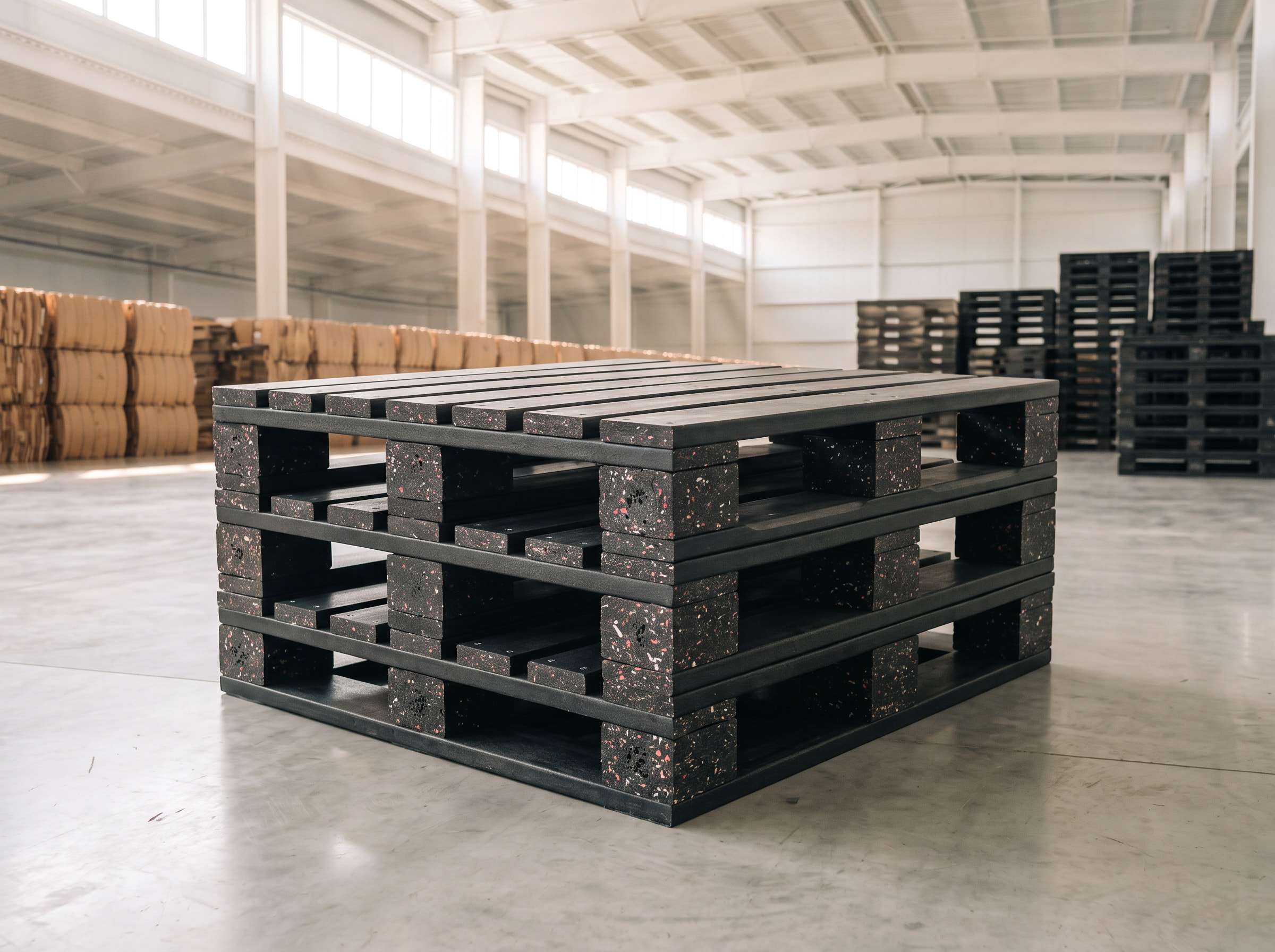
We turn your purge, drool and rejected parts, even hard-to-recycle plastics like XLPE and fiber optic cable, into heavy-duty, reusable pallets for your facility. Your scrap stops being a disposal cost and comes back as equipment you use every day.
How it works
From your scrap to your shop floor
Five steps, one loop. The plastic that leaves your facility as waste comes back as the pallets you store and ship on.
Collect
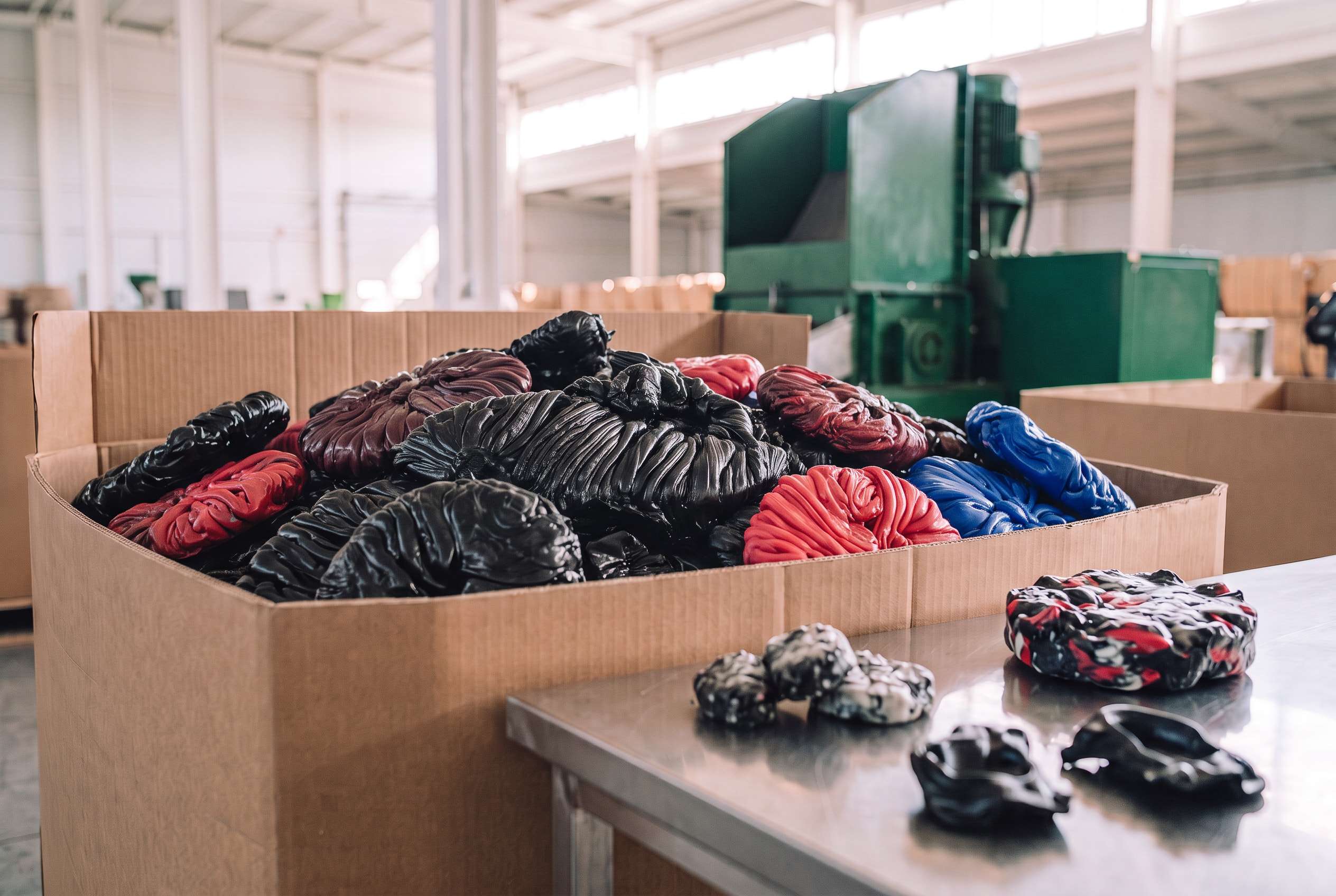
We pick up your purge, drool and rejected parts along with the rest of your recycling.
Grind
Your scrap is ground into uniform regrind at SRS.
Extrude
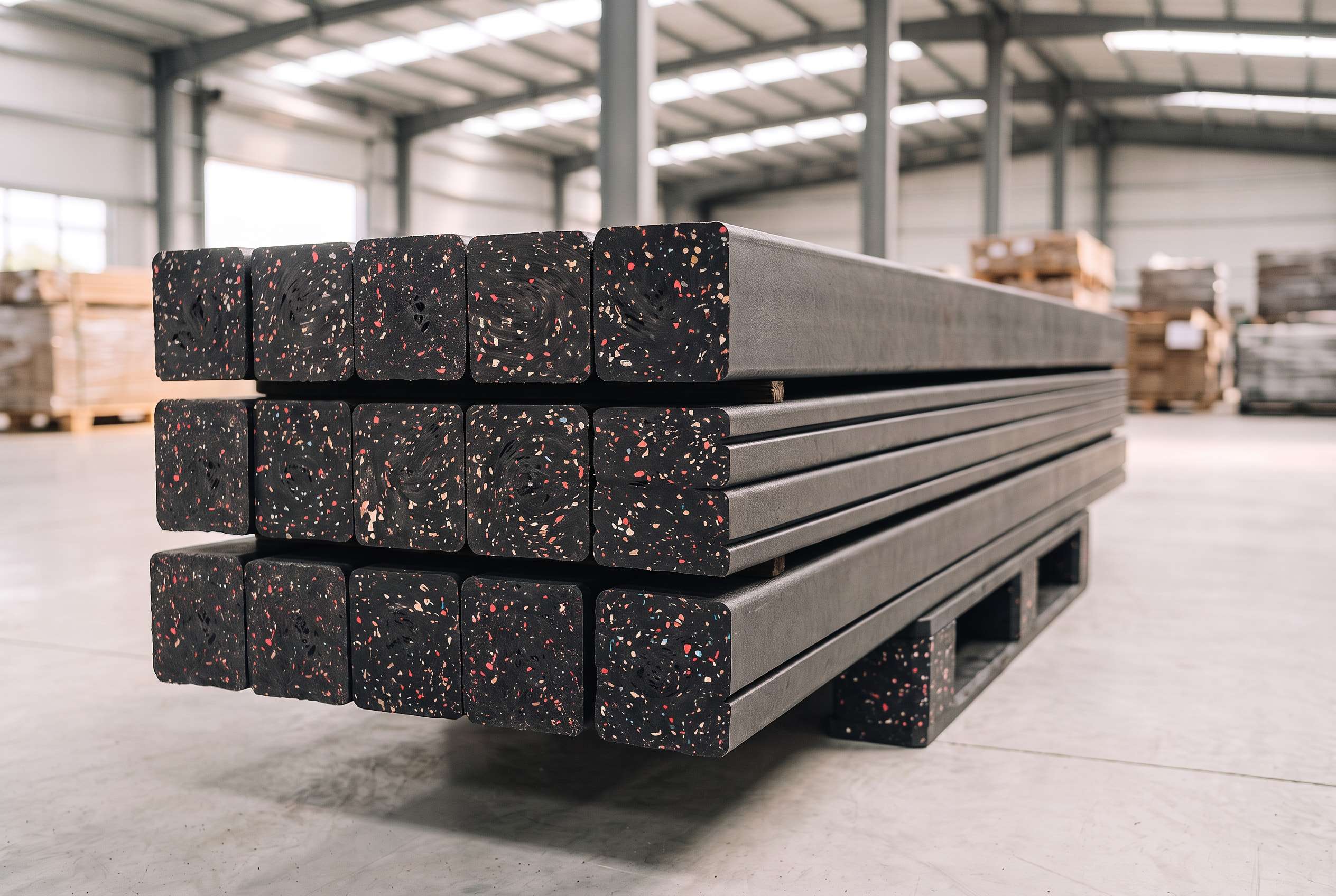
The regrind is melted and extruded into solid plastic boards and blocks.
Build
We cut and assemble the boards into pallets built to your specs.
Return
The finished pallets go back to work in your facility.
Back where it started: your facility
Your material
It starts with what you already throw away
Purge, drool and rejected parts are part of every plastics manufacturing operation, and most of it gets hauled away at your expense. We collect it with the rest of your recycling and grind it into regrind, ready to become something useful.
What we can use
- Purge
- Drool
- Rejected parts
- Off-spec product
- Hopper-drain pellets
- Cross-linked XLPE
- Fiber optic cable
Not sure your material will work? Tell us what you generate and we'll let you know.
Hard-to-recycle plastics
Even the plastic nobody else will take
Some plastics can't be recycled the usual way, so they've traditionally gone straight to a landfill. We can make pallets from them too.
Ask about your materialCross-linked polymers like XLPE
Cross-linking keeps XLPE from melting down and re-forming like ordinary plastic, which has traditionally made it one of the hardest plastics to recycle. We can turn it into pallets.
Contaminated material like fiber optic cable
Glass fibers, strength yarns and other materials bound up in the jacketing make fiber optic cable a contaminated stream most recyclers turn away. It can become pallets too.
Custom builds
Pallets built around your operation
We cut and assemble the boards into pallets designed for the way you work.
- Sized for your products, racking and equipment
- Stringer and block designs
- Two-way or four-way forklift entry
- Screw-fastened, so a damaged board can be replaced
Why closed-loop pallets
Back on your floor, working for you
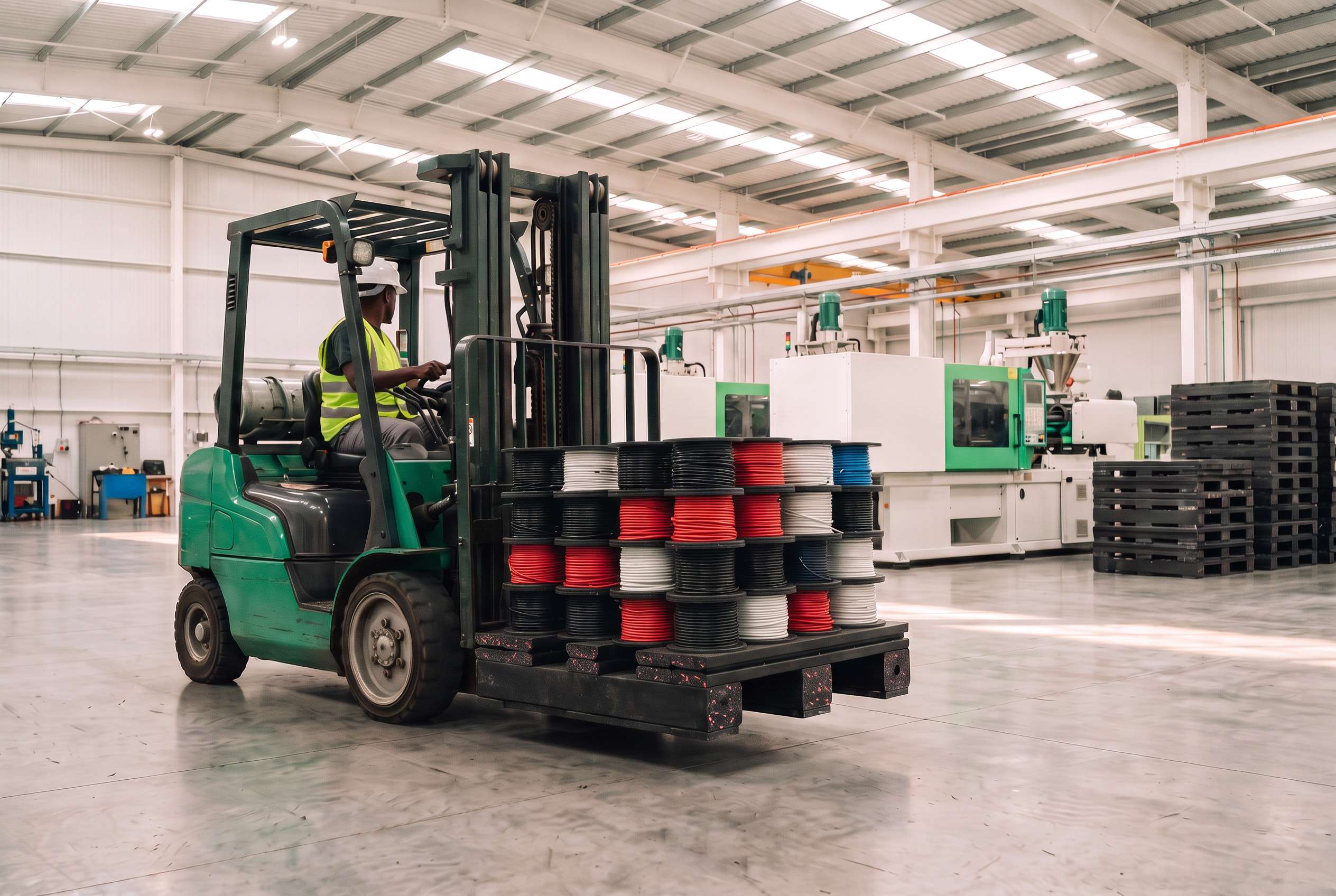
Finished pallets go back to your facility, ready to carry your products, parts and materials. The scrap that used to cost you money becomes equipment you use every day.
Turn a cost into an asset
Scrap you used to pay to haul away comes back as equipment your team uses every day.
Built for heavy use
Solid plastic won't rot, splinter or soak up moisture the way wood does, so pallets stay in service longer.
Made to fit
Sizes and designs built around your products, your racking and your equipment.
A loop you can show
Your own scrap, reused on your own floor: a sustainability story your customers can see.
Find out what your scrap could become
Tell us what plastic waste your facility generates and what pallets you use today. We'll show you how to close the loop.